
Children’s Dignity Must Not Be Traded for Views
Social media offers varied and useful content, but it also exposes children to exploitation in the name of entertainment or publicity. Some adults involve children in scenes designed to increase views without adequate attention to psychological and social consequences. Children should not bear the cost of the pursuit of attention.
The danger sometimes appears in videos that frighten, embarrass or humiliate a child while the adult describes them as a joke. The original discussion included an example involving an attempt to put a child’s head inside a washing machine for a video. Calling something entertainment does not remove responsibility for children’s safety. Families and competent authorities share a protective role, and the influence of such material on other children matters too.
Other forms of exploitation resemble competitions. A child is attracted by an apparently valuable prize, but the actual reward is far less than viewers are told. Even where the child knows the arrangement, it can normalise misleading others at a stage when honesty and judgment are developing. This conflicts with the fair treatment and truthful example children need.
Some online personalities recognise that children’s spontaneous reactions attract attention, yet fail to use that influence responsibly. Directing a child towards inappropriate behaviour or treating the child merely as a source of engagement ignores possible long-term effects.
Children’s images can also become a vehicle for conflict after parents separate. Filming tears, worn clothing or distress to deliver a message to the other parent may turn the child into part of an adult dispute. Whichever parent acts in this way, custody arrangements should not become a means of retaliation or a demonstration of control.
Oman’s Child Law, issued by Royal Decree 22/2014, establishes protection against violence, exploitation and abuse, with reporting and intervention mechanisms. Reporting a possible violation is not dependent on permission from a guardian. Whether conduct constitutes an offence, and the applicable penalty, must nevertheless be determined through the specific facts and statutory provisions.
Article 1 defines a child as a person below 18 Gregorian years. Article 2(c) gives priority to the child’s best interests in decisions and measures taken by administrative and judicial authorities and care institutions. This requires attention to the actual effect of a proposed decision on the child.
Article 7 protects children against violence, exploitation and abuse, and recognises humane treatment preserving dignity, reputation and honour. Article 56 prohibits specified conduct, including abduction and sale, sexual abuse and exploitation, use in pornographic material, slavery or forced labour, cross-border smuggling for exploitation or violence, and violence against children. Each case must still be examined against the particular elements and definitions.
Article 60 provides for child protection committees and the judicial enforcement status needed by their members to implement the law. Article 61 addresses complaints and reports concerning violations, violence, exploitation and abuse. Article 62 recognises the right of any person to report and requires protection of the reporter’s identity. Article 63 imposes reporting duties on doctors, teachers and others who learn of relevant circumstances through their profession, position or work.
Under Article 64, a child exposed to violence, exploitation or abuse may be placed in temporary care by the prosecution authority following a child protection representative’s recommendation. The purpose is safety, necessary care and rehabilitation. Return to a guardian and subsequent follow-up remain subject to legal conditions and procedure.
Article 72 provides imprisonment of 5 to 15 years and a fine of OMR 5,000 to 10,000 for prohibited conduct falling within Articles 55 and 56. Its application requires checking the conduct and the scope of those provisions. Other violations are governed by their corresponding rules, and any legally applicable greater penalty must also be considered. This range cannot be presented as the automatic punishment for every inappropriate video involving a child.
The protection framework goes beyond prohibitions by placing responsibilities on the relevant institutions. Children’s care is a social responsibility extending beyond the home. Their safety, dignity and development should take precedence over publicity, entertainment or disagreement between adults.
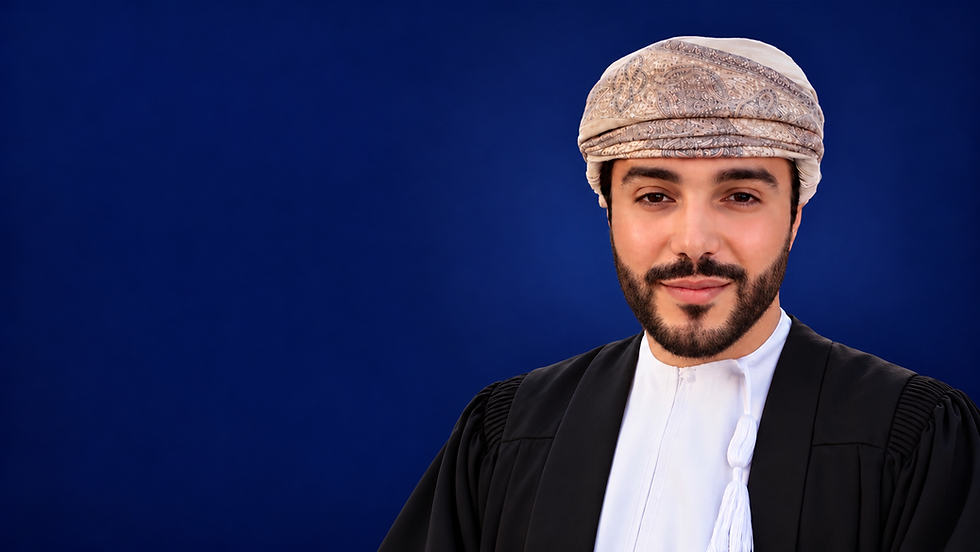
By Mohammed bin Saeed Al-Maamari, Advocate and Legal Consultant.
Al-Maamari & Al-Saidi Law Firm | +968 90605000 | info@mflegal.net | mohd@mflegal.net


Comments